Re-release ready
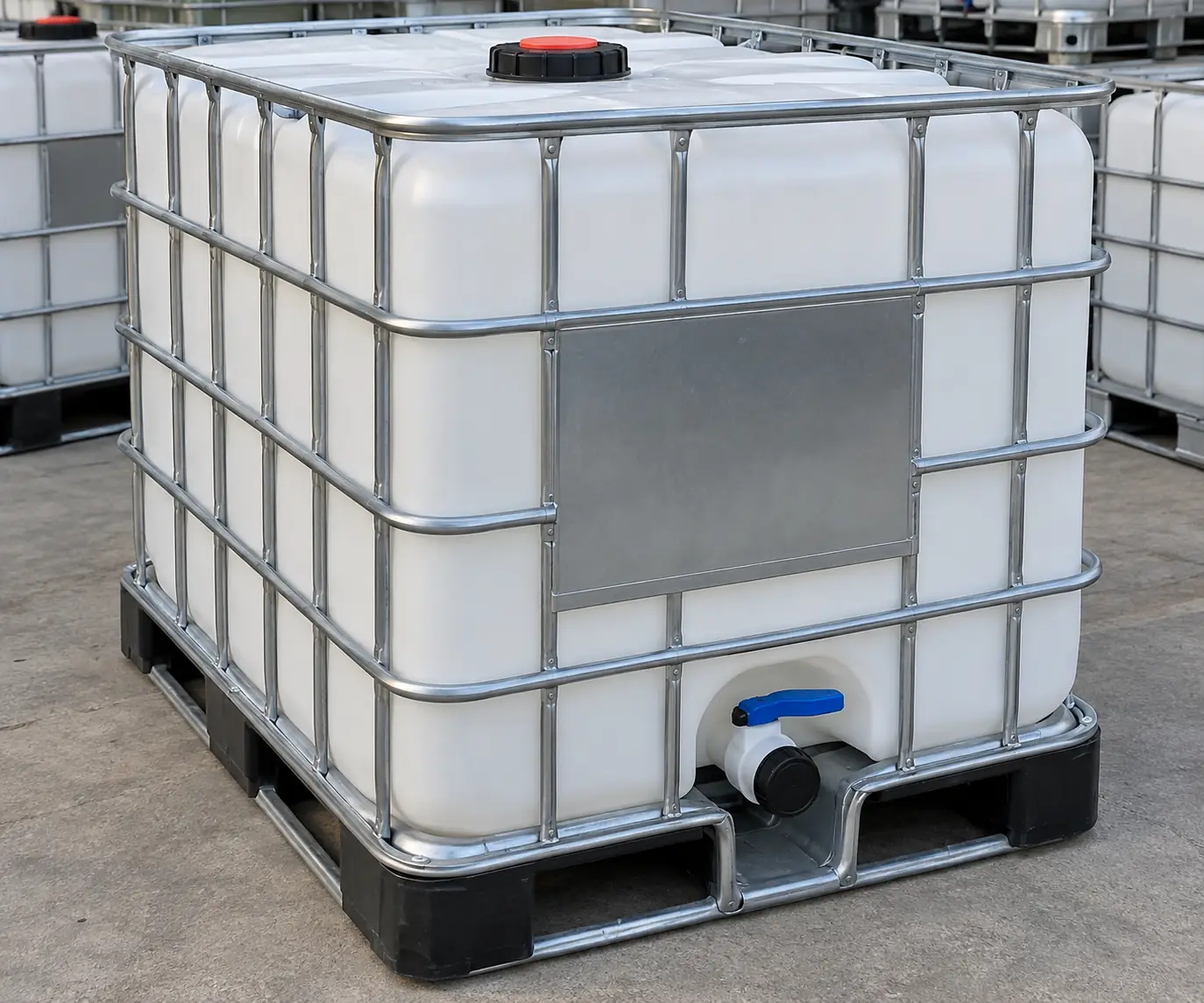
Clear or lightly scuffed bottle, square cage, full UN marking, documented history. Goes straight back into product service, including food when the wash certificate says so.
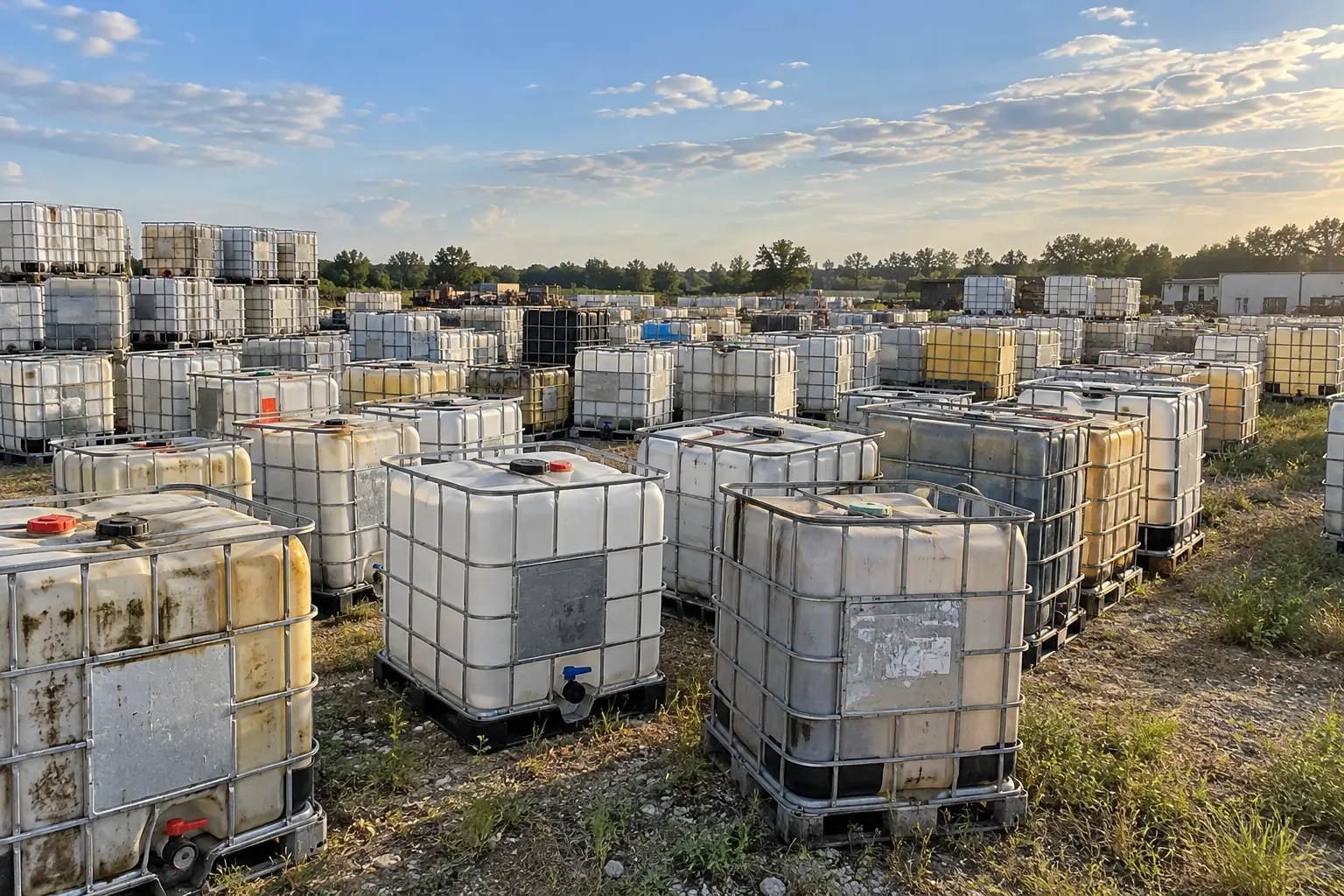
Four honest bands, two sizes, one yard full of containers that other people were finished with and we were not.
Filter by size, grade and history. Price bands move with the resin market and the season — the quote you get through the form is the one that holds.
| Container | Grade | Bottle condition | Hardware | Processing | Price band |
|---|---|---|---|---|---|
| 275 gal composite | Grade A — food | Natural HDPE, clear | S60x6 + 6" cap | Cycle 3 washed, certificate | $78–95 |
| 275 gal composite | Grade A — industrial | Light scuffing | 2" butterfly + cap | Triple rinsed, documented | $58–74 |
| 275 gal composite | Grade B | Stained, sound walls | 2" butterfly + cap | Triple rinsed | $38–52 |
| 275 gal composite | Grade C | Heavy stain, watertight | Valve varies | Rinsed, as-is | $18–30 |
| 275 gal rebottled | Grade A equivalent | New bottle, reused cage | New valve + gaskets | Leak tested, re-marked | $84–102 |
| 330 gal composite | Grade A — industrial | Light scuffing | 2" butterfly + cap | Triple rinsed, documented | $66–88 |
| 330 gal composite | Grade B | Stained, sound walls | 2" butterfly + cap | Triple rinsed | $44–60 |
| 330 gal composite | Grade C | Cosmetic damage | Valve varies | Rinsed, as-is | $22–34 |
| 275 gal cage + pallet only | Cage only | No bottle | n/a | Wire-wheeled, square | $14–26 |
| 275 gal food-grade one-trip | New | Virgin resin, unused | New hardware | Factory sealed | $168–210 |
Indicative bands for pickup at the Peoria yard, updated quarterly. Volume pricing starts at 48 units.
Clear or lightly scuffed bottle, square cage, full UN marking, documented history. Goes straight back into product service, including food when the wash certificate says so.
Stained or discoloured but structurally sound and watertight. Our biggest band by volume and the right answer for ag, water, glycol and general industrial duty.
Heavy staining, cosmetic cage damage, still holds liquid. Non-potable duty, storage, and the raw material for every upcycle build we make.
Bottle already recycled. The cage, pallet and hardware are sound — storage lockers, firewood racks, equipment crates and rack inserts.
Every container is scored against eighteen published checks before it gets a letter. If a tote arrives below the grade we sold, we replace it or refund it.
Composite, full steel or plastic. It matters for racking, for forklift entry and for washdown environments.
Butterfly or ball, S60x6 or NPT. Tell us what your fill and discharge hardware uses and we fit it before shipping.
Vented for off-gassing products, solid for everything else, tamper ring if your customers expect one.
Wash certificate, last-contents history, diversion statement. Free, but we need to know to include it.
One container if you collect from the yard, four for delivery inside 60 miles, twelve for free delivery on a standing lane.
Yes. Every container is photographed at intake and we will send the shots of the specific pallet you are buying.
Bands are updated with the resin market and the season. The quote you get through the form is the price that holds.
We do, on common carrier. Freight is quoted separately and double-stacked empties ship surprisingly cheaply.
Used container availability is not a warehouse decision, it is a function of who emptied what last quarter. Understanding the inbound flow explains every gap in the stock board.
| Source | Share of intake | Typical grade out | Seasonality |
|---|---|---|---|
| Agricultural retailers and co-ops | 31% | Grade B | Heavy June–August |
| Chemical blenders and manufacturers | 22% | Grade A / B | Flat |
| Food and beverage processors | 14% | Food grade / B | Mild autumn peak |
| Breweries and distilleries | 9% | Grade B | Production calendar |
| Municipal and utility yards | 7% | Grade B | Spring, after brine season |
| Plant shutdowns and lease ends | 11% | Mixed, often C | Unpredictable |
| Other industry | 6% | Mixed | Flat |
Before anything is unstrapped. It protects you and it protects us, and twice last year it proved damage happened in transit rather than at grading.
Every load ships with a count sheet by grade. Check it at the truck, not after the driver has left.
Open a valve, hold a light behind a bottle, read a UN plate. Three containers tells you whether the pallet matches the grade.
Bill of lading, count sheet, diversion statement, and any wash certificates you asked for. Missing paperwork is easier to fix on day one.
Fourteen days from delivery, with a photograph. No inspection report, no restocking fee, and we do not require the container back before a replacement ships.
Tell us the same day and we reconcile against the loading photographs, which we keep for every outbound load. In practice this is almost always a miscount at one end or the other.
Not if they came from us with a wash record — they were washed, inspected and sealed. If you have an internal policy that requires it anyway, rinse records you generate are worth keeping for resale value later.
On concrete, valve side out, three high empty with posts aligned and matching heights. Out of direct sun if you can; UV plus flex is what eventually crazes a bottle.
We will buy them back at the current band for their condition, which on unused containers is usually what you paid less freight. That is a purchase, not a return, and it is the normal way this works.
On the left, empties as they arrive: ungraded, undocumented, stained by whatever they last held. On the right, what leaves the yard after eighteen checks, a wash and new hardware.